
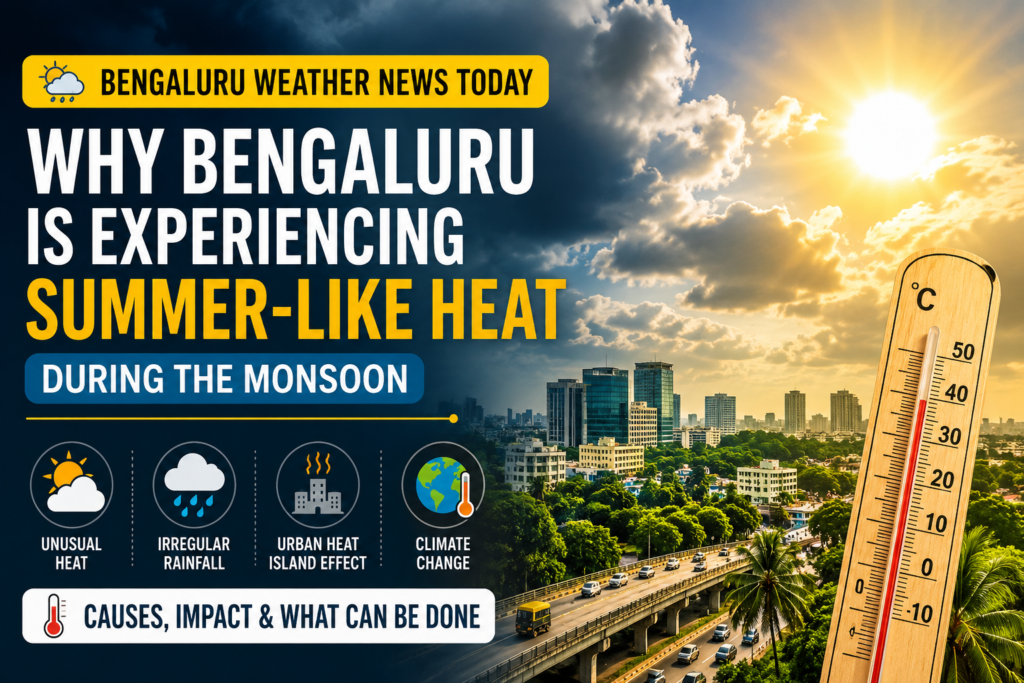

Bengaluru is always famous for having cool climatic conditions. For this reason, it has earned the nickname “India’s Garden City.” Moreover, many people have always preferred visiting the city because of its moderate climate. However, lately, there have been some strange climatic changes. For instance, although it is the season of monsoon, high temperatures have been experienced in Bengaluru.
The southwestern monsoon is expected to bring cloud cover, precipitation, and cool temperatures to Karnataka. The current search for Bengaluru weather news will indicate the presence of high temperature, high humidity, and irregular precipitation in the city. Bengaluru is known for its pleasant climatic conditions but, as mentioned earlier, lately, there has been strange weather.
This article will examine some of the main factors responsible for the high temperatures of Bengaluru during the monsoon.
Read Other Related Blog – West Bengal Politics: The Ongoing Battle Between BJP and TMC
Bengaluru’s Traditional Monsoon Climate
In the past, Bengaluru has maintained a cool climate owing to the city being elevated at about 900 meters above the sea level. The temperature during the summer season has been cool as compared to most cities in India.
The city, during the period of southwest monsoon season, which occurs from early June to September, faces:
- Heavy rainfall
- Sky with clouds
- Low temperatures during the day
- A pleasant evening
- Green surroundings
The usual temperature range recorded during the period is between 25°C and 29°C. Recent climatic data shows that the maximum temperature sometimes reaches 31°C or more when there should be continuous rainfall.
Why Is Bengaluru So Hot During the Monsoon Period?
1. Lower Rainfall Occurrence
One of the main reasons is the uneven rainfall occurrence.
There have not been steady rains all through the week but only some few heavy rains after long periods without any. It means that in cases where there has been no rainfall for several days, the sunlight increases temperatures as it heats the earth, roads, and buildings.
In case of low rainfall, the effect of the monsoon season is greatly reduced.
2. Breaks in the Monsoon
Meteorologists also use the term “monsoon breaks” where rainfall becomes lower over regions of India for some time.
During these times:
- The cloud cover becomes lower.
- Sunlight becomes more intense.
- Days become hotter.
- Moisture in the air is high.
As a result of these two factors, the weather becomes hot and feels more humid than the measured temperature.
3. Climate Change is Shaping Weather Conditions
Global warming and climate change are among the most significant influences on the development of strange weather phenomena all over the world.
- Higher global temperatures affect:
- Timing of precipitation
- Intensity of precipitation
- Heat waves
- Extreme weather events
- Seasonal changes
According to scientists, global warming leads to the unpredictability of monsoons. Rather than stable rain, cities will face:
- Heavy rain
- Periods without rain
- Sudden increases in temperature
All these changes can be noticed especially in the south of India and its capital, Bengaluru.
4. Urban Heat Island Effect
Urbanization has been extensive in Bengaluru in the past two decades.
Extensive areas of:
- Building structures
- Asphalt roads
- Flyovers
- Shopping and commercial complex structures
- Apartment buildings
have replaced open areas and natural green scape. Heat gets absorbed by concrete and asphalt throughout the day and is slowly released at night time, leading to the cities being warmer than surrounding rural areas.
This effect is called the Urban Heat Island Effect. Therefore, even when areas surrounding the city receive rain and cooler temperatures, densely populated urban areas tend to be warmer.
5. Dwindling Natural Greenscape
Bengaluru used to have parks, lakes, and tree-lined roads.
But with rapid urbanization, there has been:
- Destruction of natural tree cover
- Destruction of wetlands
- Creating of artificial lakes
- Lessening of open natural greenspace
Trees help in keeping the surrounding area cooler due to shading and transpiration of moisture into the air. Less number of trees will lead to higher surface temperatures.
6. High Humidity Creates the Feel of Warmth
People often confuse humidity with temperature. Though the thermometer shows 30°C, higher humidity levels prevent effective evaporation of sweat.
So, one feels:
- Suffocated
- Uncomfortable
- Tired
During the monsoon the humidity in the air is really high more than 70-80 percent. This makes the warm afternoons feel very uncomfortable.
Read Other Related Blog – 24K Gold Today Price: Latest Updates and Market Trends
The Role of Global Climate Patterns
The big climate systems like El Niño and La Niña can also change Indias monsoon.
These climate patterns can affect the monsoon because of the temperature of the water in the Pacific Ocean. They can change:
- The amount of rain that falls
- When the monsoon starts
- Where the rain falls
- The temperature patterns
The weather in Bengaluru depends on local factors but the big global climate systems can often change the weather during different times of the year.
Effects on Daily Life
The weather during the monsoon has been a problem for people in many ways. Increased Electricity Consumption
More people are using:
- Air conditioners
- Coolers
- Fans
This means that more electricity is being used in the city.
Health Concerns :The humid weather can make people sick with:
- Dehydration
- Heat exhaustion
- Fatigue
- Headaches
- Skin infections
Children and old people and people who work outside are more likely to get sick.
Water Demand: When it is hot people use water for drinking for their homes and for gardening. Bengaluru already does not have enough water sometimes and the hot weather can make it even harder to have enough water.
Traffic Challenges: The heat is a problem for people who are traveling those on motorcycles or waiting for buses in the afternoon. The heat and the heavy rain can also make the traffic very bad. Environmental Consequences The changing weather is also bad for the environment.
Stress on Lakes:The weather makes the water in the lakes and reservoirs evaporate so the water level goes down. nImpact, on Plant When it does not rain for a time during the monsoon it can hurt the trees, gardens and crops around Bengaluru.
Air Quality: When it does not rain the bad air does not get cleaned,. The air quality can be bad.
What Can Residents Do?
People cannot control the weather. They can reduce the effect of hot weather by taking simple steps. nResidents can stay safe from conditions by doing a few simple things.
Stay Hydrated
Residents should drink a lot of water throughout the day even if they do not feel thirsty. Residents need to drink water to stay healthy and safe from conditions.
Avoid Peak Afternoon Heat
Residents should try to limit activities between noon and 3 PM whenever possible. Residents can stay indoors during the part of the day to stay safe.
Wear Light Clothing
Residents should choose clothes that help keep them cool like cotton clothes that allow air to pass through. Cotton clothes are good for weather because they help regulate body temperature.
Plant Trees
When residents plant more trees in their community it helps reduce the temperature in the city over time.n Residents can help reduce temperatures by planting trees.
Save Water
Residents should use water carefully especially when it does not rain much. Residents need to save water to stay safe from conditions and water shortages.
What Can the City Do?
There are things the city can do to help reduce the effect of hot weather.n Experts say the city can do things to help.
Improve Urban Planning
The city can make the city cooler by increasing areas and preserving parks. This helps cool the city and reduce hot conditions.
Protect Lakes
When the city restores lakes it helps the environment and moderates temperatures. The city can help reduce conditions by protecting lakes.
Expand Tree Plantation
The city can plant trees along roads and in urban areas to reduce the heat.Tree plantation helps reduce the heat island effect in the city.
Better Rainwater Harvesting
The city can capture rainwater during the monsoon season to improve groundwater and reduce water shortages. The city can help reduce water shortages by harvesting rainwater.
Climate-Resilient Infrastructure
The city should build buildings and use environmentally friendly urban planning.This helps the city stay safe from conditions and extreme weather. What Does the Future Hold?n Weather experts think that unusual weather events may happen often as the earth gets hotter.
Residents of cities like Bengaluru will likely experience changes.
Cities, like Bengaluru will likely experience:
- irregular rainfall
- Hotter summers
- Warmer monsoon periods
- More extreme weather events
However the city can reduce many of these impacts by planning for the climate developing sustainably and conserving the environment. Residents and the city can work together to reduce the effect of weather and stay safe. The city and residents can help reduce the impact of conditions by taking simple steps and working together.
Conclusion
The latest Bengaluru weather news today clearly shows that the city’s unusual summer-like heat during the monsoon is the result of multiple factors, including climate change, irregular rainfall, high humidity, and rapid urbanization. While these weather patterns may become more common in the future, sustainable urban planning and environmental conservation can help Bengaluru adapt to these changing climate conditions.
The current weather in Bengaluru is showing that the city’s heat during the monsoon is because of factors. These include climate change, rainfall being high humidity and rapid urbanization. These weather patterns might happen often in the future. If we plan the city sustainably and conserve the environment Bengaluru can adapt to the changing climate. By knowing why this unusual weather is happening people who live here can make choices.