

Hypertension, which is also known as high blood pressure, has been reported to affect more than a billion people worldwide; however, the sad part is that most of them are unaware of this. Hypertension, which is also known as the “silent killer,” does not show any symptoms on the surface but rather makes a person susceptible to heart attacks, stroke, and kidney ailments.
It is extremely important for one to have knowledge regarding blood pressure management not just for patients of high blood pressure but for everyone This guide contains all the information you need to understand How to Control Blood Pressure effectively through healthy lifestyle changes and medical guidance.
Understanding Blood Pressure Numbers
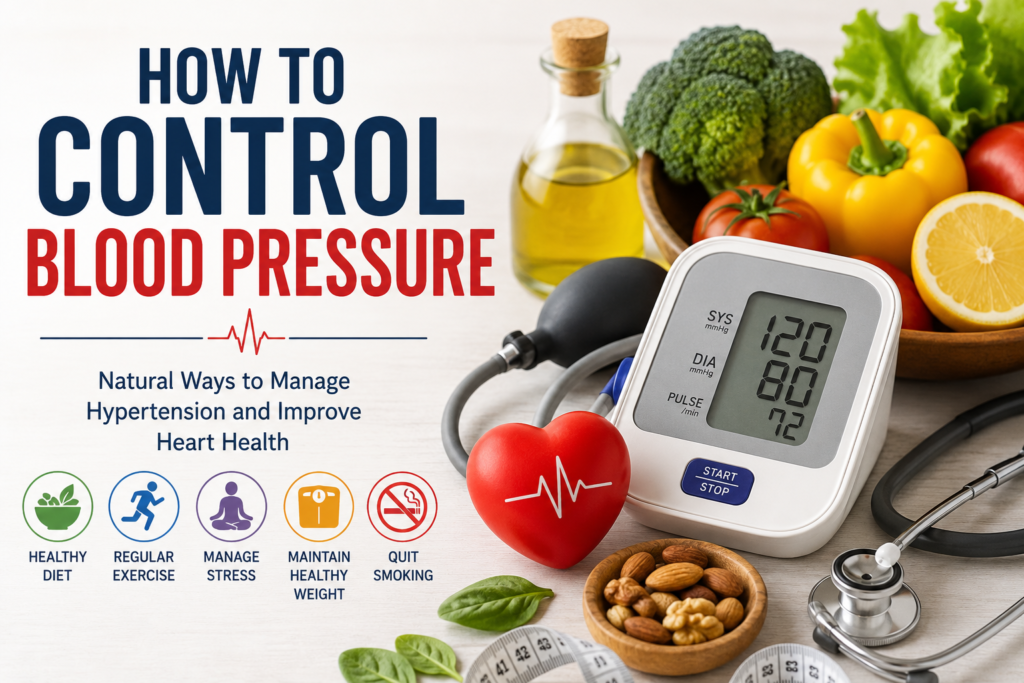
But first, we should try to get some background information about the numbers. The blood pressure number includes two digits that represent systolic (when the heart beats) and diastolic (between beats) numbers. For example, 120/80 is the average blood pressure level for healthy adults. Levels starting from 130/80 and higher are usually described as being high.
As you can see, knowing your blood pressure level is an important part of understanding How to Control Blood Pressure and managing hypertension. In order to do this, you should monitor your blood pressure regularly, either at a doctor’s office, at a pharmacy, or using a personal device.
Read Related Blog – Best Diet for Immune System: What to Eat to Stay Healthy Year-Round
How to Control Blood Pressure Through Diet
One of the most effective means of fighting with hypertension is dieting. The DASH diet (dietary approaches to stop hypertension) is usually prescribed by doctors who specialize in heart diseases and is effective in clinical trials. It includes:
- High quantities of potassium-containing fruits and vegetables
- Eating whole grains instead of carbohydrate foods
- Consuming lean protein foods, like fish, poultry, legumes
- Dairy products containing low fat
- Decreasing the quantity of sodium, less than 1,500-2,300 mg per day
It is crucial to minimize the amount of foods which you buy ready for consumption. Packaged snacks, canned soups and fast food are usually very high in sodium. Reading the nutrition tables and cooking your own food are the easiest and the most sustainable means of decreasing the intake of sodium.
The Role of Physical Activity
Physical exercise builds up the heart muscles, enabling it to effectively circulate blood using minimal energy, thereby putting little stress on the walls of the arteries.
According to the American Heart Association, an individual should aim at getting at least 150 minutes of moderate aerobic exercises weekly, equivalent to about 30 minutes every day, five days in a week. Some exercises that one may consider include walking, swimming, cycling, and dancing.
Lifting weights a few times a week, along with engaging in other forms of physical activities, can help improve your heart’s performance as well and is an important step in How to Control Blood Pressure naturally.
Even a couple of minutes spent moving here and there throughout the day, such as climbing the stairs and exercising while on phone conversations, are good for heart performance.
Managing Stress and Sleep
The stress hormones that are triggered by chronic stress include cortisol and adrenaline, and they temporarily increase blood pressure levels. If stress happens consistently and not occasionally, it may be considered a cause of long-term high blood pressure. There are ways to control stress reactions through deep breathing exercises, yoga, and simple walking outside on a regular basis.
Sleep is also very important. Not getting enough sleep or poor sleep quality can have an effect on your blood pressure because people who do not get at least seven hours of sleep each night are at risk of high blood pressure.
Limiting Alcohol and Quitting Smoking
Both alcohol and tobacco are closely associated with high blood pressure. Excessive consumption of alcohol leads to high readings and decreases the efficiency of the medication for the treatment of high blood pressure. The limit is about one glass per day for women and two glasses per day for men.
Smoking results in a temporary rise of the blood pressure reading every time a cigarette is smoked; besides, smoking deteriorates the health condition of the arteries, which become stiff and unable to relax. The cessation of smoking is one of the most influential factors for both blood pressure and overall health conditions of heart and lungs.
Maintaining a Healthy Weight
Additional body weight makes the heart work extra hard in pumping blood, causing strain in the walls of arteries. Losing even a small amount of weight—five to ten percent of one’s body weight—can bring about positive changes in the levels of blood pressure. This does not have to be achieved through extraordinary means, since simply following the tips provided for diet and exercise will assist in losing weight in a sustainable manner.
In addition to weight, measuring one’s waist size is usually a good indicator, as excess abdominal fat is the most dangerous when it comes to developing cardiovascular diseases.
When Medication Becomes Necessary
However, for certain individuals, lifestyle modifications might not be sufficient to regulate blood pressure to optimal levels, which is absolutely natural. The doctor will recommend the intake of medications such as diuretics, ACE inhibitors, calcium channel blockers, and beta-blockers depending on the individual medical condition. All these medications have their own working principle — some eliminate extra fluid and sodium from the body, and the others decrease the heart’s workload.
One must follow the instructions provided by the physician concerning the medication regimen and never make any modifications or discontinuations on one’s own, because such action might lead to the dramatic increase in blood pressure. It is recommended to combine the treatment with the methods mentioned above.
Building a Sustainable Routine
In order to prevent high blood pressure from becoming chronic, it is necessary to develop new habits that will be organically integrated into a person’s life and will not depend only on short impulses of motivation.
Such minor, but consistent, things as a morning run or walk, less salty meals, and additional night sleep will give tangible results within weeks and months, making them essential for anyone learning How to Control Blood Pressure.
Collaboration with a medical professional who will help to create realistic goals and monitor their achievement will help to focus efforts on what should be done in order to achieve the best results possible. Regular visits to a doctor will reveal any deviations in advance and will help to avoid serious complications.
Conclusion
Understanding How to Control Blood Pressure begins with making conscious decisions such as following a balanced low-sodium diet, engaging in regular physical exercise, managing stress, getting good sleep, drinking alcohol in moderation, quitting smoking, and maintaining a healthy weight. For some people, only these recommendations will be enough, but some may also require the use of drugs.
Here’s the FAQ section:
1.What is the blood pressure level considered normal?
Normal blood pressure level is typically 120/80 mmHg. Any values constantly exceeding 130/80 mmHg are considered to be high blood pressure, but your doctor will be able to provide you with more information regarding what is acceptable in your particular case.
2. How fast is it possible to improve the blood pressure levels via diet and exercising?
While some people experience positive results after a couple of weeks of lowering their sodium consumption and engaging in physical exercises, the results will be visible in several months for others.
3. Is it possible to lower the blood pressure without using medication?
In many cases, it is possible because of dieting, exercising, stress management, and weight loss. Still, there might be situations when medication will be needed along with the rest of changes.
4. Can stress lead to high blood pressure levels?
The answer is no, but if it becomes chronic and remains uncontrolled, then it might be one of the factors contributing to the development of hypertension.
5. How often should I check my blood pressure at home?
If you’re actively managing hypertension, checking once or twice a day at consistent times (morning and evening) is common. Otherwise, a few times a week or at routine doctor visits is usually enough.
6. Is salt the only dietary factor that matters?
No. While reducing sodium is important, potassium-rich foods, overall calorie balance, and limiting processed foods and added sugars all play a role too.
7. Can high blood pressure be reversed completely?
In some cases, especially when caught early and paired with consistent lifestyle changes, blood pressure can return to normal without ongoing medication. In others, it becomes a manageable, lifelong condition — your doctor can give you a realistic outlook based on your health history.